
Arvada Directory Collections
Arvada does not have one all-in-one directory database. The useful shelf is spread across the Colorado Directories Index, Jefferson County Public Library listings, Library of Congress scans, newspaper microfilm, and local archives. The table separates a real collection run from a finding aid or a lead that still needs confirmation.
Newspaper runs matter because a name can appear in a notice, advertisement, obituary, or address reference even when a telephone directory omitted it. The telephone volumes are also selective. They record listed subscribers and businesses, not every person at an address.
| Collection | Years | Where Held | Access |
|---|---|---|---|
| Colorado Directories Index | Municipality and year index | Denver Public Library Western History | Free online finding aid |
| Arvada Enterprise | 1903-1970 listing; 1908-1970 microfilm | JCPL, History Colorado, LOC/CHNC portions | Library, microfilm, and free digital portions |
| Arvada Sun | 1911-1919 | Jefferson County library resource listing | Library and microfilm route |
| Arvada Citizen and Citizen-Sentinel | 1966-1979 | Jefferson County library resource listing | Library newspaper collection |
| Arvada Sentinel | 1979-current in listing | Jefferson County library resource listing | Library newspaper collection |
| Colorado telephone directories | 1912-1953 examples | Library of Congress digitized volumes | Free page images and OCR |
| Reverse or criss-cross volume | Not verified | Ask Jefferson County Public Library | Confirm publisher and year before use |
| Arvada Historical Society holdings | Date-specific local material | McIlvoy House, 7307 Grandview Avenue | Call ahead; archive and museum access |
The runs do not form an uninterrupted year-by-year series. The library listing reaches farther for some newspapers than the digitized scans, while the Colorado Directories Index identifies volumes without promising that every volume survives. Treat a missing year as an access or holding gap until a librarian or archivist checks the exact title.
Find an Arvada Volume
The Colorado Directories Index is the best first stop when the goal is to identify a volume by municipality, county, and year. It is a finding aid, not a promise that every listed book is scanned. Record the title, locality heading, year, and holding institution before moving to a page image or a shelf request.
The index also keeps a search from drifting into a broad national directory hunt. For Arvada, the Library of Congress supplies several free Colorado telephone-directory scans, while the Jefferson County library route supplies local newspaper and microfilm context. Search the locality label used in the volume, then test nearby years instead of assuming that an absent result means no residents were listed.
The directory index route is visible in the research tool itself:
Open the Denver Public Library Colorado Directories Index before requesting a shelf copy or a scan.
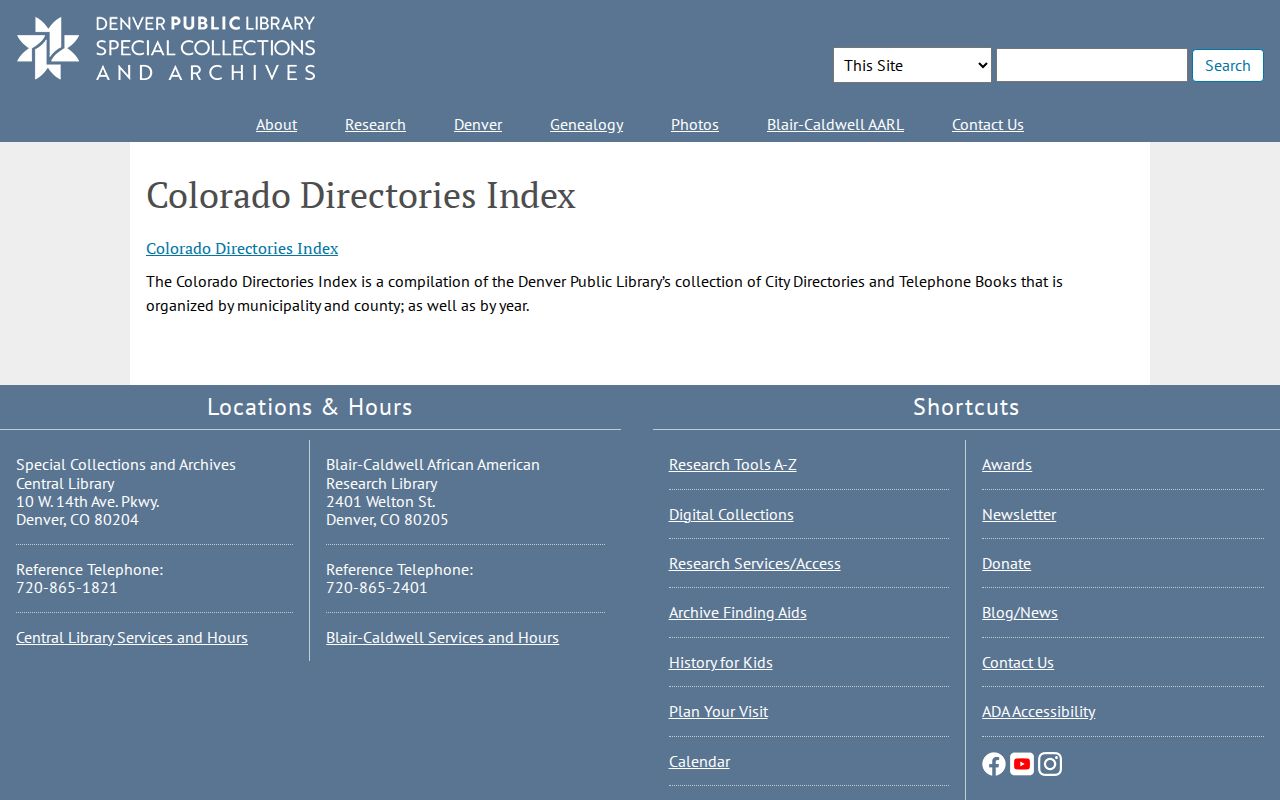
The index screen anchors an Arvada city directory search to a real municipality and year, which makes later page references easier to verify.
Arvada Directory and Newspaper Runs
Arvada's printed record trail is broader than a telephone book. The library listing gives the Arvada Enterprise a 1903-1970 run, while History Colorado describes 1908-1970 microfilm and an online Colorado Historic Newspapers Collection run through January 1958 with possible gaps. The Library of Congress preserves a July 3, 1908 Enterprise issue with searchable page text and four-page issue metadata.
The Arvada Sun covers 1911-1919. The Arvada Citizen covers 1966-1970, the Citizen-Sentinel continues through 1979, and the Arvada Sentinel is listed from 1979 to the present. Those titles can close gaps between directory years with notices, moves, obituaries, local business advertisements, and school or civic names.
Use the Colorado Historic Newspapers Collection for free searching, then check the image because OCR can split names and street words. The 1908 Arvada Enterprise issue is a useful early sample, not proof that every issue from the title run is online.
Arvada Library's Directory Route
The Arvada Library is the practical route for local newspaper holdings, microfilm, catalog help, and licensed databases. Its collection path includes the Enterprise, Sun, Citizen, Citizen-Sentinel, Sentinel, and Arvada Press. Ask for the exact title and year, and ask the reference desk whether a reverse or criss-cross volume is actually arranged by street address.
Access changed in 2026. The main branch closed January 7 for a redesign, and the Arvada Balsam Temporary Library opened January 17. The redesign notice gives a spring 2027 reopening estimate and a $14,895,781 project budget. Call 303-235-5275 and check the library system before planning a local-history visit; the closure changes the place of service, not the value of the collection.
Newspaper microfilm is especially useful when a directory line stops. Search an address with its old abbreviation, then look for an obituary, sale notice, engagement or marriage announcement, or local event that names the same household. No standalone Arvada obituary index was verified in the official sources, so the newspaper run and reference desk are the documented fallback.
If a historical item belongs to the City of Arvada rather than the library, use the city's Records and Requests route under the Colorado Open Records Act, or submit a focused request through Arvada JustFOIA. Include the department, record type, address or name, date range, and preferred delivery route; a request is a fallback for city-held material, not a substitute for a library or archive collection.
Note: a call-ahead check matters during the redesign because local-history help and physical holdings may be served through another library location.
Reading an Arvada Directory Line
A 1950 Arvada city directory line is compact. It may combine a person or business name, a street address, a locality label, and a telephone exchange or number. The Library of Congress 1950 Colorado telephone directory includes lines such as Arvada Transfer Co at 7701 Raleigh, Arvada Veterinary Hospital at 5500 Wadswth Av, and individual entries with abbreviated street names. OCR spacing is unreliable, so the page image outranks the text layer.
Read each mark as evidence with a limit. A listed telephone subscriber is not a complete household roster. A business can appear at a residential address, an unlisted number will be absent, and a printed address can reflect the directory's publication date rather than a later owner or occupant. Keep the exact page, locality heading, and spelling in the research log.
| Name | The listed person, household head, or business name |
|---|---|
| Spouse | A spouse may appear in parentheses or in a separate household line when the volume provides it |
| Occupation | A historical occupation or business line, useful as a clue rather than proof of identity |
| Address | House number and street, often shortened by the volume's abbreviation style |
| Owner or renter mark | Use only the symbol and key printed in that volume; do not assume every run uses one |
| Telephone line | Exchange and number for a listed subscriber, with the 1953 HArrison 4 change as a later comparison clue |
The 1950 scan gives a useful entry inventory:
| Arvada Transfer Co | 7701 Raleigh, Arvada, 0534J1 |
|---|---|
| Arvada Veterinary Hospital | 5500 Wadswth Av, Arvada, 179 |
| Gilbert G H | 5625 Brntwa tArvada1575 in imperfect OCR |
| Knowles R C | 32 Youngfield tArvada 0272R1 in imperfect OCR |
| Stauffer V D | 5606 Cart tArvada 1724W in imperfect OCR |
- Criss-cross directory
- A reverse arrangement that starts with a street address and returns a listed name; an Arvada run and year still need confirmation.
- Householder index
- An alphabetical name aid that points to a household entry when a volume supplies one.
- Abbreviation key
- The volume's legend for shortened street types, residence notes, and other marks; read it before interpreting a line.
The “r” and “b” conventions often seen in older books must be read from the volume's own key. A symbol can carry local meaning, and a missing mark is not proof that a person did not live at the address.
The HArrison 4 Telephone Clue
The fall 1953 Colorado telephone directory carries a useful bridge for an Arvada directory search: Arvada numbers moved to new HArrison 4 numbers. A name or address can therefore look absent when the researcher is comparing telephone details rather than the street line.
HArrison 4 describes a telephone exchange change, not a street renumbering. The official sources do not establish a citywide Arvada renumbering or street-renaming year. Compare the street direction, street type, locality, and page image first. Then use the 1950 and 1953 telephone volumes as dated evidence rather than turning an exchange note into a claim about the address itself.
Note: exchange changes can break a phone-number search while the printed Arvada address remains the strongest continuity clue.
Arvada Reverse Directory Evidence Gap
A regular alphabetical directory moves from name to address. A true criss-cross or reverse directory starts with the address and returns a listed household or subscriber. That distinction matters when tracing a house, but no official page reviewed confirms an Arvada-specific reverse volume, publisher, or year run.
Ask the Jefferson County Public Library reference desk for “criss-cross,” “reverse,” and “street-address directory” under Arvada or Jefferson County. Record the exact title, publisher, year, page arrangement, and holding location before treating it as address-keyed evidence. If the volume is not verified, use a deed, newspaper, permit, or archive record instead of relabeling an alphabetical volume.
Arvada Historical Society Archives
The Arvada Historical Society adds local context when a printed directory line needs a building, family, or neighborhood connection. The Marcetta Rhoads Lutz Archives are at the McIlvoy House, 7307 Grandview Avenue. The society, founded in 1972 by Lois Lindstrom, holds photographs, documents, books, oral histories, artifacts, and museum material rather than a complete resident index.
Visit details at the society's archive and museum information page list Friday-Saturday hours from 11-3, call-ahead advice at 303-431-1261, and Flour Mill tours by appointment or season. The Flour Mill at 5590 Olde Wadsworth Boulevard and Belgin Cemetery can supply place-based context for a name that appears in a printed directory or newspaper.
Check the Arvada Historical Society visit route before traveling to the archive.
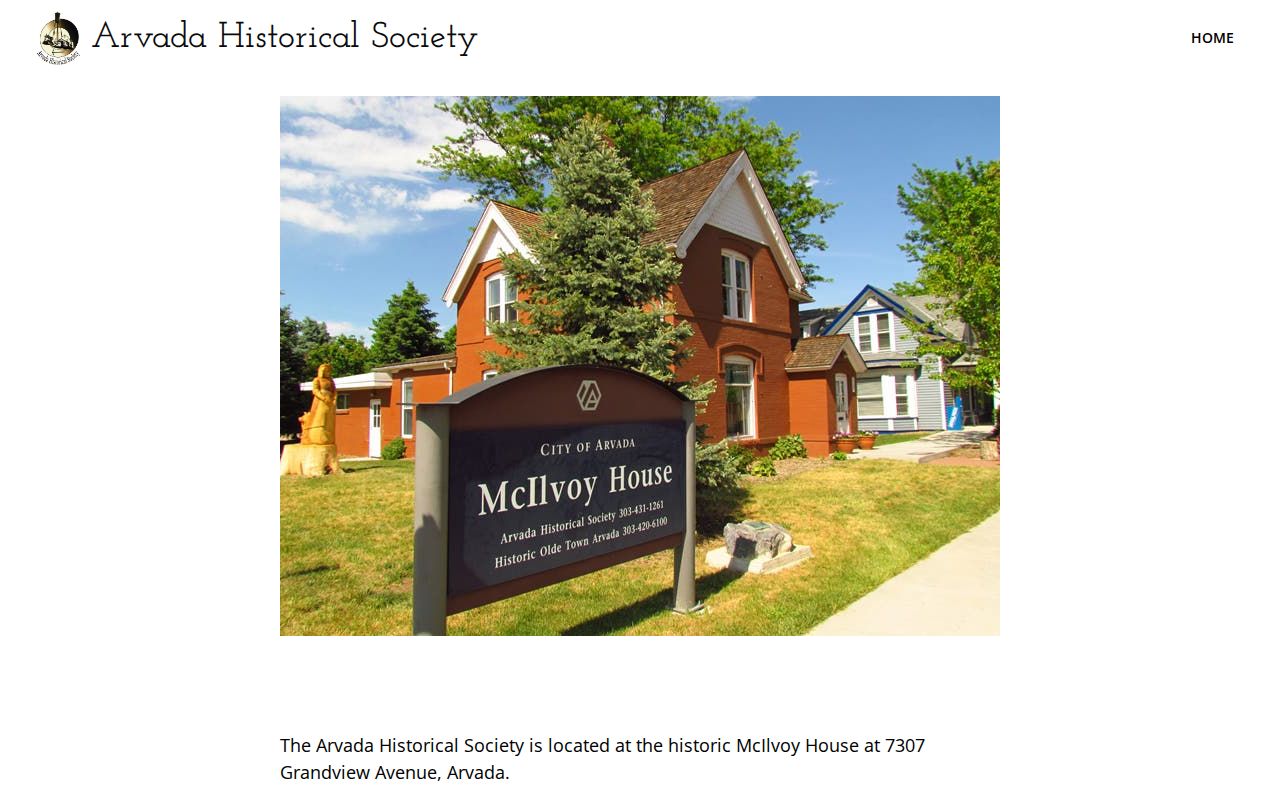
The archive route helps connect an Arvada city directory entry to photographs, oral histories, and local places without treating a museum collection as a searchable household roll.
Trace Arvada Directory Years
A household trail works best when each directory year is treated as a dated lead. Start with a known name or address, preserve the spelling on the page, and note every street abbreviation, telephone exchange, spouse reference, and owner or renter mark supplied by that volume. Pair the printed line with a released census year and a newspaper search before assigning a move or death.
- Find the first Arvada directory line that matches the name, street, and locality.
- Check adjacent years and preserve the original address form instead of silently modernizing it.
- Compare the line with the 1910, 1920, 1930, 1940, or 1950 census release that fits the date.
- Search the Arvada Enterprise, Arvada Sun, or later local newspaper run for moves, notices, and obituaries.
- Close an ownership question with the recorder, deed, probate, or will record rather than the directory alone.
The 1950 census is the most recent full census released under the 72-year rule as of the research date. It shows historical household relationships and geography, not a current residence. A name disappearing from a directory can mean a move, death, an unlisted number, a publication gap, or an OCR problem. The modern parcel and street chain belongs in the Arvada street directory, where current address-keyed records can be kept separate from the historical shelf.
Keep a source log with the volume title, publication date, page, image link, address spelling, and the conclusion supported by the entry. That small discipline prevents a listed subscriber from becoming an unsupported claim about every person who lived at the property.